

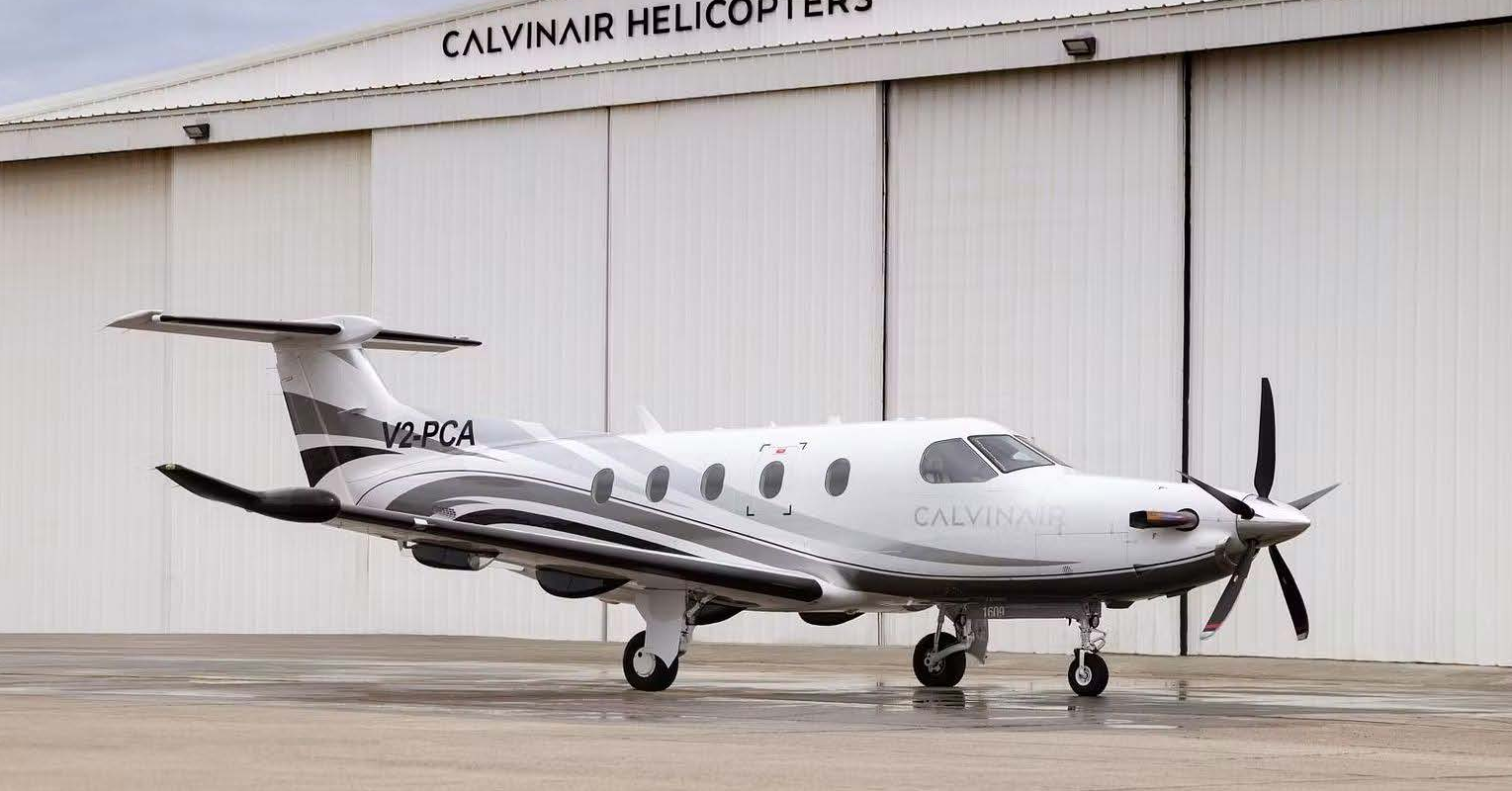

CalvinAir Helicopters has expanded its operational capacity with the addition of a Pilatus PC-12, marking a significant shift from its previously helicopter-only fleet and strengthening Antigua and Barbuda’s options for regional charter and emergency medical airlift services.
The expansion comes at a time when rising medical referrals, increased regional movement, and year-end reflections on national resilience have underscored the importance of reliable, flexible air connectivity for small island states.
The acquisition of the fixed-wing aircraft represents a strategic expansion for the locally based operator, enabling it to offer longer-distance charter flights and enhanced medical evacuation support beyond the range of rotary aircraft.
CalvinAir has built its reputation on helicopter tours and charter services, operating a fleet of luxury Airbus H130 helicopters. The addition of the PC-12 broadens the company’s scope, adding a high-speed, long-range aircraft capable of transporting passengers, cargo, and medical cases throughout the wider Caribbean.
The PC-12, a turboprop aircraft configured to carry up to eight passengers in a VIP layout, is known for its reliability, payload capacity, and efficient long-range performance. With cruising speeds of approximately 300 miles per hour, the aircraft significantly reduces travel times compared with helicopter operations.
According to Mark Fleming, the addition meets growing demand for flexible aviation solutions that combine comfort, speed, and operational reach.“This aircraft enables us to offer more comprehensive services, particularly on longer-distance flights, while continuing to support our vital emergency medical airlift missions,” Fleming said.
Beyond charter operations, the expanded fleet enhances Antigua and Barbuda’s capacity to respond to medical emergencies requiring off-island treatment. The PC-12’s range and cabin configuration enable patients to be transported to specialized medical facilities across the region, including Trinidad, without the limitations of shorter-range aircraft.
The aircraft has already been deployed in such a role, recently transporting Antiguan taxi driver Kimroy Williams to Trinidad for specialised spinal surgery after a severe condition left him unable to walk. The use of the PC-12 in this case underscored the aircraft’s value as a medical airlift platform, particularly when time, distance, and patient stability are critical.
With the addition of the fixed-wing aircraft, CalvinAir now operates a mixed fleet capable of meeting private, corporate, tourism, and emergency-response needs. The company says the expanded capability enables it to respond more effectively to a range of scenarios, from executive travel to urgent medical evacuations.
Fleming noted that safety, reliability, and readiness remain central to the company’s operations as it broadens its service offerings. “Whether for charter flights or emergency missions, our goal is to provide safe, efficient, and professional service on every flight,” he said.
The fleet expansion comes amid broader conversations about air connectivity, emergency preparedness, and private-sector support for national services in Antigua and Barbuda. As demand grows for timely access to regional medical care and flexible travel options, operators capable of bridging gaps in distance and infrastructure are playing an increasingly important role.
CalvinAir’s move into fixed-wing operations positions the company as a more versatile aviation provider, complementing existing commercial services and addressing needs that are not always met by scheduled airlines.
In that context, the expansion reflects more than a company milestone, underscoring the evolving role of private aviation in strengthening Antigua and Barbuda’s national readiness and its connections throughout the wider Caribbean.

